

The Future is Information
Information now connects nearly every discipline. The College of Information Science is showing what that means for the future of research, education and society.
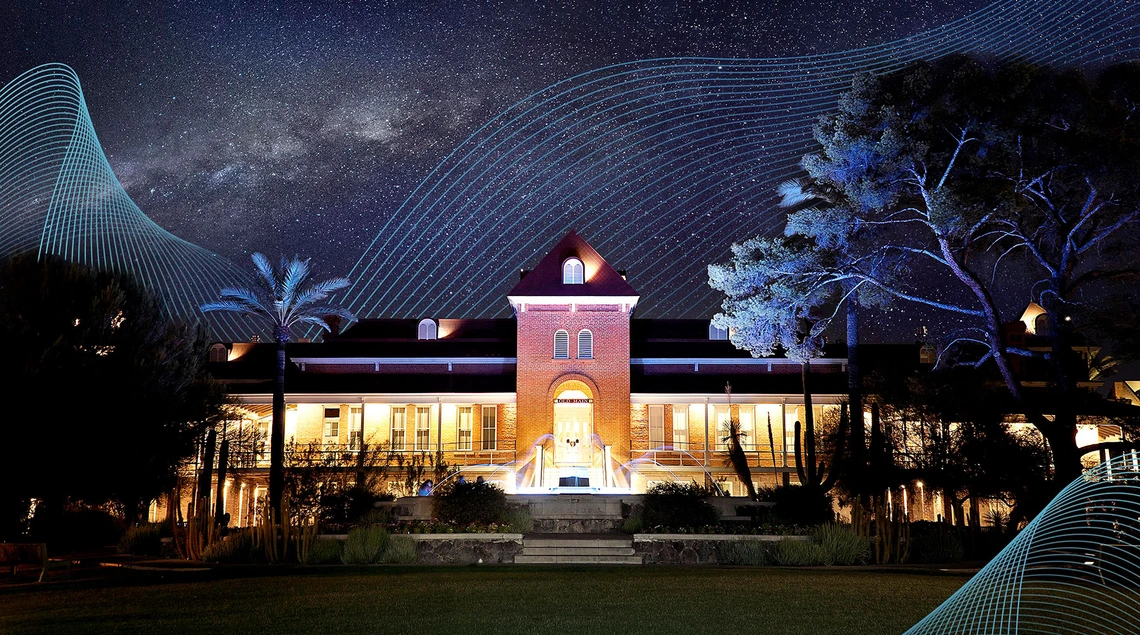
Every breakthrough begins with information.
Before scientists can model a changing climate, they must gather and interpret enormous volumes of environmental data. Before physicians can personalize treatments, they must transform genetic information into actionable knowledge. Before artificial intelligence can assist researchers, protect critical infrastructure or accelerate discovery, it depends on information that is accurate, trustworthy and responsibly managed.
Increasingly, the defining challenges of our time are not constrained by individual disciplines. They are information challenges.
That realization is quietly reshaping research universities across the world.
As discovery becomes more data intensive, technologies more interconnected and society more dependent on digital systems, information has become the common language linking nearly every field of inquiry. The ability to create, organize, protect, preserve and understand information is becoming essential infrastructure for research, education and public service.
At the University of Arizona, that future has taken shape in the College of Information Science.
Over the past decade, the college has grown from a specialized academic unit into one of the university’s most interdisciplinary enterprises, bringing together expertise in artificial intelligence, cybersecurity, data science, machine learning, game design, extended reality, digital collections, librarianship and human-centered computing. More important than the breadth of its programs is the breadth of its purpose: helping people and disciplines work together to solve increasingly complex problems through information.

Catherine Brooks, College of Information Science Interim Dean and Professor.
That vision has guided Interim Dean Catherine Brooks since she became director of the School of Information in 2019 and, later, the inaugural leader of Arizona’s College of Information Science. During a period of extraordinary change in higher education—and remarkable growth within the college—Brooks has consistently viewed information science not as another academic discipline, but as a bridge connecting many of them.
“We often think of information science as being about technology,” Brooks says. “Technology is certainly part of what we do, but it isn’t why we exist.”
“Our work begins with people. It always has,” she continues. “Whether we’re thinking about libraries, AI, cybersecurity, scientific data, digital preservation or immersive technologies, we’re asking the same fundamental questions: How do we create information people can trust? How do we ensure access? How do we protect it? How do we use it responsibly? And how do we help people use information to improve lives?”
Those questions have their roots in librarianship, a discipline whose longstanding commitment to stewardship, access, preservation and public service laid the intellectual foundation for today’s information science. While the technologies have changed dramatically, the underlying mission has not.
“Most iSchools, including ours, began as graduate schools for library science, and that legacy is at the heart of what we do,” says Associate Professor Andrea Thomer. “The community-based, curatorial ethic core to library and information science shapes how we teach and how we approach our research today. This humanistic grounding distinguishes us from the ‘pure’ computer sciences; we’re not just interested in technology, but also its use, users and broader social impact.”
Brooks agrees: “That’s why information science is becoming increasingly important to universities. Every discipline is becoming more data-intensive. Every discipline is asking questions about information. Every discipline needs people who can connect technology with human experience.”
That perspective continues to shape the college as new fields emerge. Artificial intelligence, cybersecurity, machine learning and immersive technologies are not departures from the college’s mission; they are contemporary expressions of the same longstanding commitment to helping people create, understand, preserve and responsibly use information.
“When we talk about human-centered computing, we mean it,” Brooks says. “Technology should expand human potential. It should support discovery, strengthen communities and improve lives. That’s the lens through which we approach every program we offer.”
Today, those principles shape research and education across every college at the University of Arizona.
Information scientists collaborate with researchers exploring climate resilience, biodiversity, precision health, digital humanities and countless other fields. As scientific discovery generates ever larger and more complex datasets, expertise in organizing, preserving, securing and interpreting information has become indispensable to the university’s research mission.

Creative computing in action: a College of Information Science student demonstrates his project for University of Arizona President Suresh Garimella.
Photo by Michael McKisson.
Brooks sees that convergence not as a trend, but as the future of higher education.
“Some of the most important questions universities are trying to answer today can’t be solved by a single discipline,” she says. “They require people with different expertise who are willing to learn from one another. Information science naturally sits at those intersections. We help connect ideas, people, data and technology in ways that allow entirely new discoveries to happen.”
That same philosophy shapes the college’s educational mission.
Students graduate prepared for careers that frequently defy traditional disciplinary boundaries. They become cybersecurity professionals safeguarding critical infrastructure, data scientists improving healthcare, game designers creating immersive educational experiences, librarians and archivists preserving cultural heritage, AI specialists developing responsible technologies, user experience designers creating more accessible digital systems and information professionals helping organizations steward information responsibly.
The careers differ. The mission does not. Each reflects a commitment to using information in service to people.
The college itself tells a similar story.
Arizona’s College of Information Science emerged through the thoughtful integration of complementary strengths: a nationally respected graduate library school, innovative undergraduate information programs and, more recently, cybersecurity programs whose addition expanded both the college’s academic breadth and its capacity to serve Arizona’s workforce and research enterprise.
Faculty also point to Brooks’ ability to broaden the college’s expertise while preserving the diversity of perspectives that define information science.

Andrea Thomer, College of Information Science Associate Professor.
“I’ve really valued how Dr. Brooks has grown our faculty in data science while maintaining strong support for the library and archival sciences, as well as critical and qualitative approaches,” Thomer says.
For Brooks, growth has always been measured less by numbers than by relationships.
It is measured by trust.
“There isn’t a secret formula for leadership,” she says. “You build relationships. You listen. You earn trust. Then you create opportunities for people to do their best work together. Universities are communities before they’re organizations.”
That philosophy reflects experiences reaching back long before academia. Growing up in the small Central Valley community of Woodlake, California, Brooks learned the value of neighbors depending on one another. As a college student and certified outdoor leadership guide, she discovered that leadership in challenging environments depended less on authority than on mutual responsibility.
Those experiences continue to shape the way she leads today.
With academic roots in communication and education rather than a single technical discipline, Brooks often jokes that she serves as “Switzerland” when bringing together faculty from diverse backgrounds. That neutrality has become an advantage. Rather than championing one field over another, she has focused on creating a college where librarians, cybersecurity experts, AI researchers, data scientists, game designers and faculty across the university see themselves as contributing to a common mission.
“I’ve always been interested in where groups of people can go together,” Brooks says. “One of the most rewarding parts of leadership is helping people see possibilities that are larger than any one program or department.”
That shared vision has positioned Arizona as an increasingly influential member of the international iSchools community, a consortium of leading universities dedicated to advancing research and education at the intersection of information, technology and society. Although each iSchool reflects the unique strengths of its institution, all share a common belief that information is fundamentally about people.
“iSchools are also unique because they are inherently interdisciplinary,” Thomer says. “The College of Information Science includes faculty with backgrounds in at least a dozen different fields, including computer science, English, biology and more. Because iSchools actively support interdisciplinary work rather than just tolerating it, our faculty have the freedom to explore truly novel topics in ways that stricter disciplinary norms elsewhere might not allow.”
“It’s worth noting that the Arizona iSchool stands out even among iSchools for its interdisciplinary breadth,” Thomer continues. “I don’t know of another school that has strengths in biodiversity informatics as well as game design.”

At iShowcase, which is held at the end of each semester, students present their interactive research and creative projects in game design, digital storytelling, data science, information science, AI, machine learning and more, many judged by industry partners and community members for prizes.
Photo by Michael McKisson.
That breadth is intentional. Rather than organizing around a single discipline or technology, the college has grown around a shared understanding that information itself—and the people who create, use and steward it—provides common ground across fields.
Few iSchools unite expertise spanning artificial intelligence, cybersecurity, data science, digital preservation, libraries, game development, extended reality and human-centered computing while simultaneously partnering across the natural sciences, health sciences, social sciences, humanities and the arts.
That breadth reflects more than institutional ambition; it reflects the changing role of the modern research university itself.
As the University of Arizona advances student success, expands interdisciplinary research and deepens its impact across Arizona and beyond, information science increasingly serves as connective tissue among those ambitions. It prepares graduates for careers that did not exist a five years ago, let alone a generation ago. It strengthens research across disciplines. It helps ensure that emerging technologies remain grounded in ethics, trust and human experience.
For Brooks, that is the promise of information science.
“The future isn’t defined by artificial intelligence alone, or cybersecurity alone, or data alone,” she says. “It’s defined by how thoughtfully we bring those things together in service to people. If we can do that well, universities won’t simply respond to the future, they’ll help create it.”
The future is information.
Increasingly, it is also one of the University of Arizona’s defining strengths.